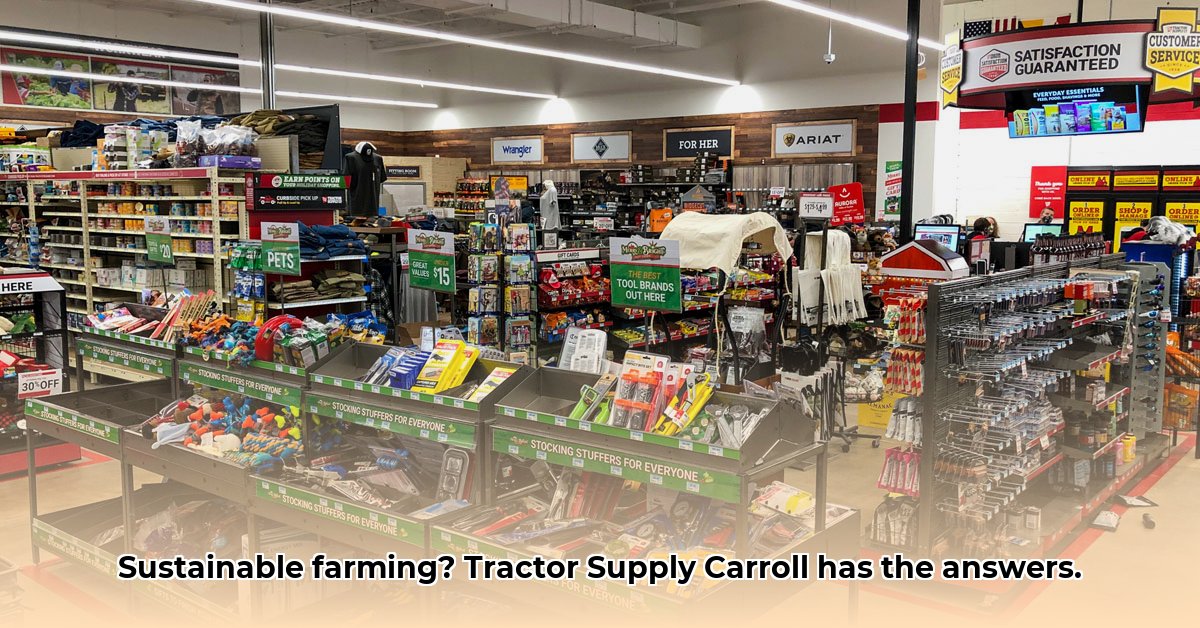
Assessing Tractor Supply's Role in Sustainable Agriculture
Tractor Supply (TSC) in Carroll, Ohio, serves as a crucial supplier for local farmers and gardeners, offering a wide array of products from animal feed and seeds to tools and fencing. However, its contribution to sustainable agriculture requires a deeper examination. While TSC indirectly supports sustainable farming by providing necessary supplies, a thorough assessment necessitates a closer look at its sourcing practices, environmental impact, and waste management strategies. How effectively does TSC contribute to the overall sustainability of Carroll's farming community? This is the central question we aim to address. For more on sustainable farming practices, see these innovative chicken tractor plans.
The store's extensive product range presents an opportunity to promote eco-friendly options, but the lack of clear labeling and promotion of sustainable products currently hinders its ability to actively support sustainable agriculture. This lack of transparency makes it challenging for environmentally conscious consumers to make informed choices, thereby reducing the impact of their potential contribution to sustainable farming.
Opportunities and Challenges for a Greener Future
Key Takeaways:
- TSC's Carroll location possesses significant potential to become a leader in promoting sustainable farming practices within its community.
- A lack of clear communication and transparency regarding sustainable sourcing and environmentally conscious practices currently limits TSC's impact.
- Collaborative efforts involving TSC, local farmers, the government, and consumers are vital for fostering a more sustainable agricultural landscape.
Actionable Steps for Stakeholders
The path toward a more sustainable future requires concerted action from various stakeholders. Here's a breakdown of actionable steps:
Tractor Supply Management:
- Short-Term (0-1 year): Conduct customer surveys to identify demand for sustainable products. Improve in-store signage to highlight existing eco-friendly items.
- Long-Term (3-5 years): Develop a comprehensive sustainability plan, including partnerships with sustainably focused suppliers, product certifications, and educational workshops for customers and staff.
Local Farmers:
- Short-Term (0-1 year): Explore creative, sustainable uses for currently available products. Share feedback with TSC regarding product needs and preferences.
- Long-Term (3-5 years): Advocate for TSC to expand its range of clearly labeled, sustainable products, actively promoting their adoption.
Local Government:
- Short-Term (0-1 year): Collaborate with TSC on community outreach programs promoting sustainable agricultural practices.
- Long-Term (3-5 years): Integrate TSC's products and services into local sustainability initiatives, utilizing grants and educational resources.
Consumers:
- Short-Term (0-1 year): Actively seek out and purchase sustainable options when available at TSC.
- Long-Term (3-5 years): Demand greater transparency from TSC regarding its sustainability initiatives and advocate for a broader range of eco-friendly products.
Addressing Potential Challenges
Several obstacles could hinder the transition to a more sustainable system:
| Risk Factor | Likelihood | Impact | Mitigation Strategy |
|---|---|---|---|
| Insufficient emphasis on sustainability | Moderate | Moderate | Implement proactive marketing and in-store promotions emphasizing sustainable choices. |
| Limited availability of certified sustainable products | High | High | Partner with certified suppliers; explore developing a private label of eco-friendly products. |
| Reliance on conventional suppliers | High | Medium | Gradually transition to a more diversified supply chain incorporating sustainable providers. |
| Consumer unawareness of sustainable options | High | Low | Launch educational campaigns, workshops, and in-store materials highlighting sustainable product choices. |
Investigating the Supply Chain: A Path to Transparency
A critical aspect of assessing TSC's role lies in investigating its supply chain. Currently, a lack of transparency regarding sourcing practices makes it difficult to fully evaluate its environmental impact. Addressing this requires:
Enhanced Transparency: TSC should openly disclose information on sourcing practices, including details on the environmental impact of its product lines.
Independent Audits: Third-party environmental audits can provide objective assessments of TSC's sustainability performance.
Customer Education: TSC can significantly enhance its contribution by actively educating customers about sustainable farming techniques through workshops, in-store materials, and collaborations with local organizations.
"The potential for Tractor Supply to become a critical partner in sustainable agriculture is significant," says Dr. Emily Carter, Professor of Environmental Science at Ohio State University. "However, achieving this requires a proactive commitment to transparency and collaborative efforts with local stakeholders."
The Road Ahead: Building a Sustainable Future Together
TSC's Carroll location has the potential to become a vital driver of sustainable agriculture in the region. By increasing transparency, actively promoting sustainable products, and collaborating with local stakeholders, it can significantly contribute to a healthier environment and a more vibrant agricultural community. The journey toward a more sustainable future will require ongoing commitment, adaptation, and continuous improvement.